Climate House – Hortus Botanicus Amsterdam


General information
-
Home page
www.zja.nl
-
Location address
Hortus Botanicus, Plantage Middenlaan 2a, 1018 DD Amsterdam
-
Location country
Netherlands
-
Year of construction
1993
-
Year of replacement of membrane
2025
-
Short description of the replacement or dismantling
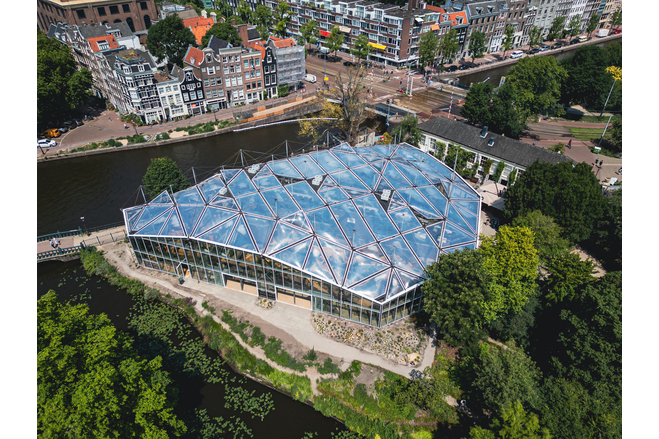
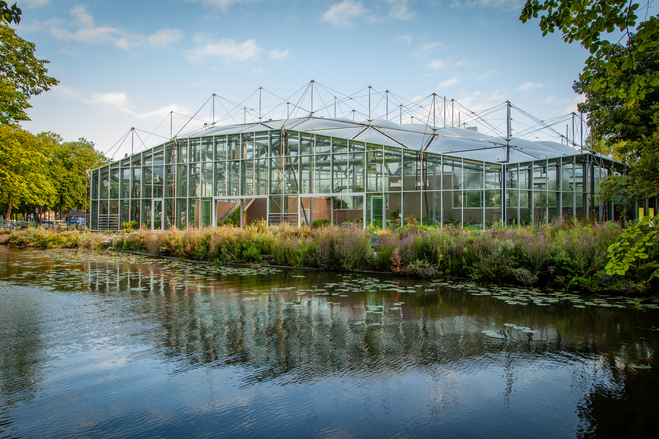
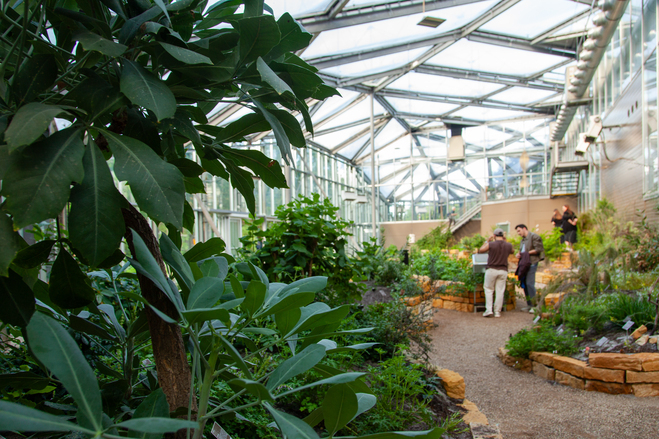
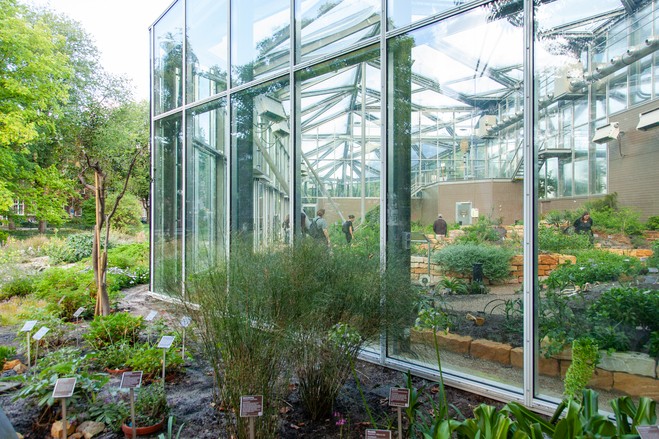
In Amsterdam’s green Plantage district stands a remarkable building: the Climate House of the Hortus Botanicus Amsterdam. Known for its contemporary high-tech steel-and-glass structure, it harmonizes with its historic surroundings through its stepped height and refined gridwork. Since 2025, its sustainability upgrade has become just as visible as the structure itself. The single-glazed façade has been replaced with insulating double glazing, and the roof now features lightweight, insulating triple-layer ETFE air cushions. ZJA Architects & Engineers, the original designers of this iconic structure in 1993, also led the redesign, while Buitink Technology realized the innovative roof.
-
Name of the client/building owner
Hortus Botanicus Amsterdam
-
Function of building
Museums
-
Degree of enclosure
Fully enclosed structure
-
Climatic zone
Temperate - cold winters and mild summers
-
Number of layers
multi-layer
-
Type of application of the membrane
covering
-
Primary function of the tensile structure
- Daylight gains
- Thermal insulation
Description
Sustainable renovation
After three decades, the greenhouse required a major renovation. The Hortus seized this opportunity to comprehensively renew the building with sustainability as a guiding principle. Since 2016, the greenhouse has shared heat and cold with the nearby H’ART Museum. Following the renovation, it has become the first gas-free public greenhouse in the Netherlands. The core principles of the original design were preserved — lightweight and transparent to ensure optimal daylight for the plants.
Engineering at 1% Mass
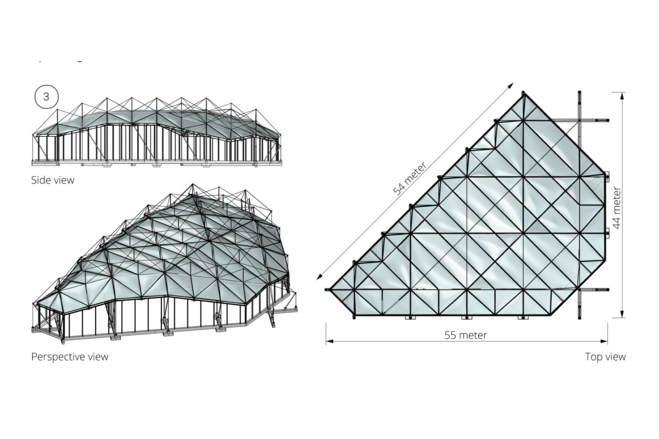
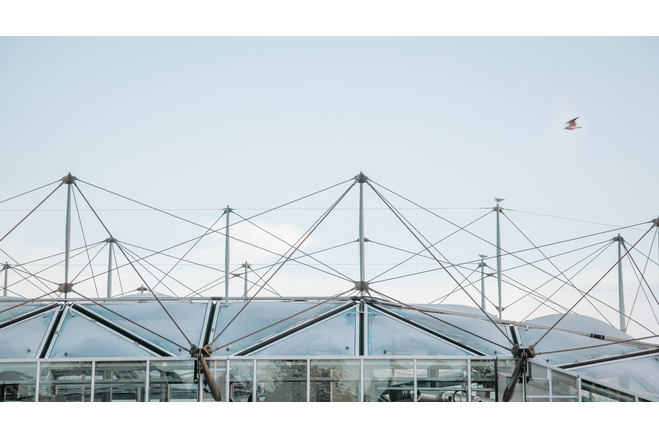
The new roof over the Climate Greenhouse can rightly be described as a technical and aesthetic achievement. Because the existing structure was reused and could not support a heavy glass roof, the designers chose for an innovative ETFE air-cushion roof. At only 1% of the weight of glass, ETFE is exceptionally lightweight, while offering 95% light transmission and a high degree of transparency. It consists of 117 ETFE cushions with a total surface area of approximately 1.500m². Nearly all cushions have a unique shape — triangles, rectangles, and chamfered rectangles — forming part of a three-dimensionally curved and domed roof surface. The complete design, including the cushions and the additional supporting structure, was fully developed in BIM based on a 3D survey.
All about climate
In addition, ETFE is highly durable (35+ years) and is resistant to UV radiation, air pollution, and other forms of contamination. Seven automated windows are integrated into the air-cushion roof and are also made of ETFE cushions. These can be opened and closed to provide natural ventilation and climate control without compromising light transmission or thermal insulation. Thanks to the upgraded climate systems, centralizes and conceals behind a new waterfall, and the reorganization of the plant collections, the greenery can now make optimal use of the building and its orientation. The perfect place for the Hortus to tell the story of biodiversity and climate change on a global scale.
Description of the environmental conditions
Material of the cover
-
Cable-net/Fabric/Hybrid/Foil
Foil
-
Material Fabric/Foil
ETFE-foil
Main dimensions and form
Duration of use
-
Temporary or permanent structure
Permanent
-
Design lifespan in years
31-..
Involved companies
-
Architects
ZJA Architects & Engineers
-
Engineers
ABT
-
Contractors
AKOR
-
Suppliers
Buitink Technology
Editor
-
Editor
Evi Corne